For years, I was that person—walking 10,000 steps daily but seeing no real change in my metabolism or weight. It wasn’t until I shifted from casual strolling to purposeful, brisk walking that the numbers started to move. The truth is, walking is one of the most powerful, low-impact tools we have for weight loss and cardiovascular health, but it demands strategy. We need to move beyond simple step counting. This comprehensive guide breaks down the metabolic science and optimal mechanics to ensure every minute you spend walking delivers maximum results.
The Metabolic Science of Effective Walking for Fat Loss
When we discuss effective walking for weight loss, we are fundamentally talking about energy systems. The body stores energy in various forms, and to truly utilize stored body fat—a process called fat oxidation—we need to maintain a specific level of sustained effort. This effort level, often referred to as the “fat burning zone,” is not achieved by chance; it’s dictated by the intensity of your movement and its corresponding metabolic demand. Understanding this science is the first step to walking smarter and achieving long-term metabolic health.
The Difference Between Casual Strolling and Brisk Walking
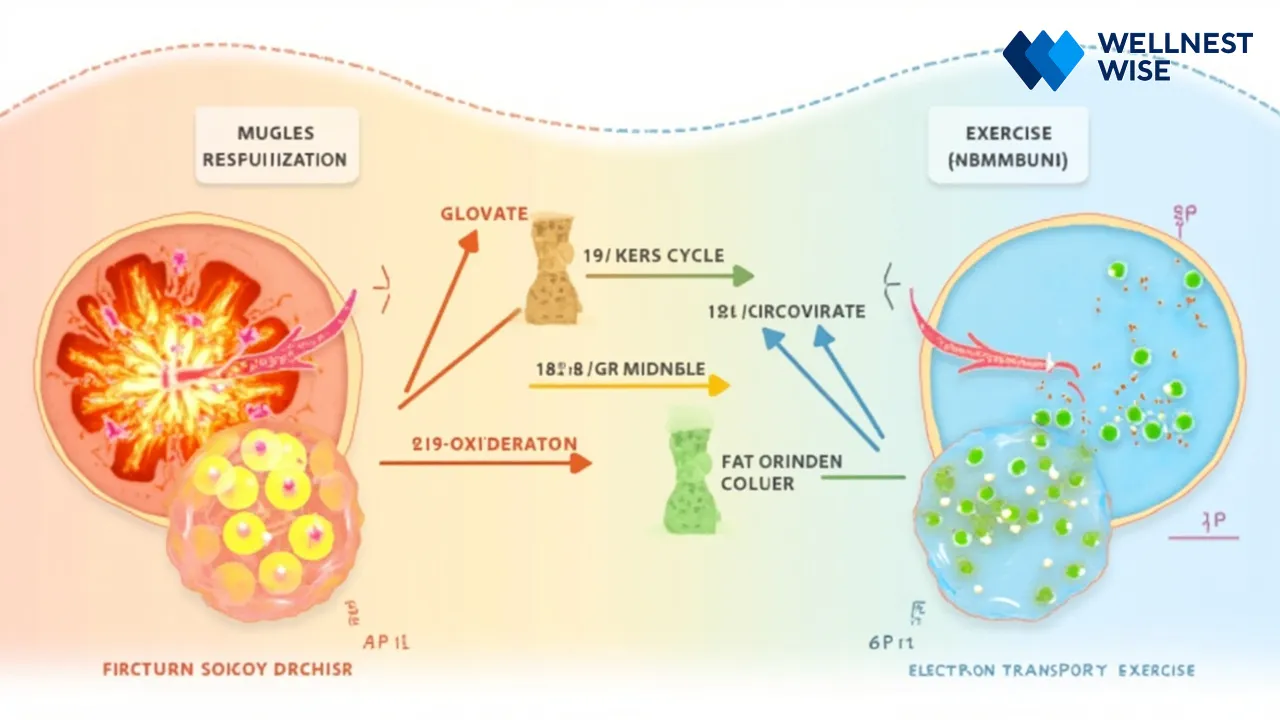
The primary difference lies in metabolic intensity. Casual strolling (walking while shopping or window-gazing) requires minimal effort and often doesn’t elevate the heart rate significantly above resting levels, primarily utilizing easily accessible glucose for fuel. Brisk walking, however, qualifies as moderate-intensity exercise. This sustained increase in demand signals the body to start breaking down stored fats to fuel the movement, making it key for walking for calorie burn.
Understanding Calorie Burn and Metabolic Equivalent of Task (MET)
To measure the true effort of your walk, scientists use the Metabolic Equivalent of Task (MET). Resting is 1 MET. To achieve meaningful calorie burn, you need to reach activities scoring 3.5 METs or higher. For example, a leisurely 2 mph walk might be 2.5 METs, but an optimal walking pace of 3.5 mph can push you closer to 4 METs. This higher MET score confirms your activity requires more oxygen and burns substantially more calories per minute, making it a reliable indicator for effective walking for weight loss.
Why Sustained Moderate Intensity Promotes Fat Oxidation
To maximize fat oxidation, the sweet spot is maintaining an intensity level where you are slightly breathless but can still hold a broken conversation—typically correlating to 60–70% of your maximum heart rate. At this moderate intensity, the body conserves its quick glycogen stores (carbohydrates) and shifts primarily to burning fat for fuel. This sustained effort, backed by data from the NHLBI, is crucial. If you go too hard, your body reverts to quick-burning sugars; if you go too easy, the demand isn’t high enough to trigger fat utilization.
Is Walking 10,000 Steps the Minimum Requirement for Guaranteed Weight Loss?
The 10,000-step goal is motivational but isn’t a magic guarantee for guaranteed weight loss. Research suggests that the intensity and pace of the steps matter far more than the raw count. If all 10,000 steps are casual, the metabolic benefit is limited. Prioritize optimal walking pace and ensuring a good portion of those steps are brisk—ideally 3,000 to 4,000 steps performed at a pace that raises your heart rate—to ensure you maximize the fat burning walking techniques.
Mastering the Mechanics: Optimal Posture, Cadence, and Pace
If you view walking as a full-body exercise, not just a leg movement, you significantly boost its efficacy. Proper mechanics are foundational not only for maximizing your caloric expenditure but also for preventing the common aches and pains that derail consistency. We must treat walking posture with the same attention a runner treats their form. Mastering these physical cues—from foot strike to head position—ensures your effort translates directly into measurable fitness gains while protecting your joints.
The Critical Role of Walking Posture Tips for Efficiency and Joint Safety
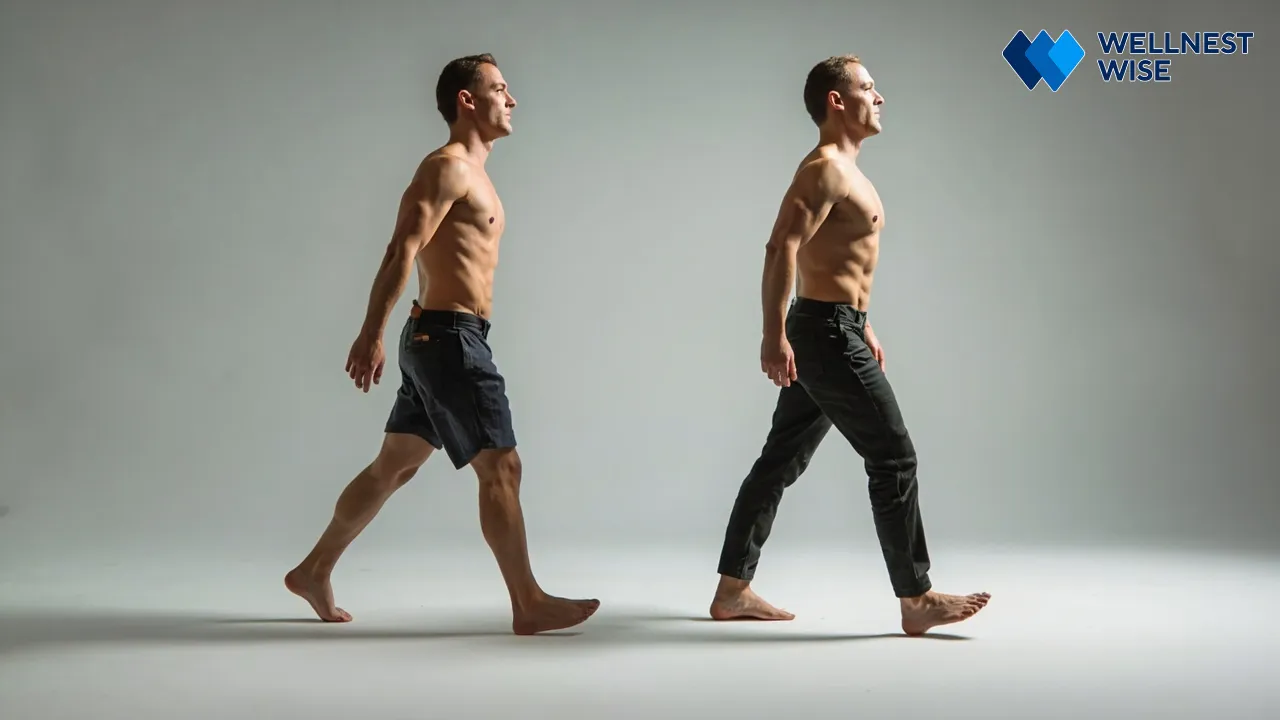
Proper walking posture tips involve standing tall, imagining a string pulling your head toward the sky. Keep your chin parallel to the ground, gaze forward (not down), and roll your shoulders back and down. Avoid leaning too far back or forward from the waist; instead, maintain a slight forward lean originating from the ankles. This upright, aligned position minimizes stress on the lower back, knees, and ankles, allowing you to walk longer and faster with less risk of injury.
Determining Your Optimal Walking Pace for Caloric Expenditure
Your optimal walking pace is the variable that determines whether you achieve metabolic benefit or not. While speed varies by individual fitness level, we can define three key intensity zones using pace (mph/km/h), Rate of Perceived Exertion (RPE), and Cadence (Steps per minute).
| Intensity Zone | Pace (mph / km/h) | RPE (Rate of Perceived Exertion 1-10) | Estimated Steps per Minute (Cadence) | Primary Metabolic Benefit |
|---|---|---|---|---|
| :— | :— | :— | :— | :— |
| Casual Stroll | 2.0 – 2.5 mph / 3.2 – 4.0 km/h | 2 – 3 (Easy) | < 100 | Recovery, Daily Movement |
| Brisk/Optimal | 3.0 – 4.0 mph / 4.8 – 6.4 km/h | 4 – 6 (Moderate) | 100 – 125 | Fat Oxidation, Cardiovascular Endurance |
| Power/Speed | 4.0+ mph / 6.4+ km/h | 7 – 8 (Hard) | 125+ | Cardiovascular Fitness, Higher Calorie Burn |
Engaging Core Muscles and Utilizing Arm Swing for Increased Energy Demand
Don’t let your arms hang passively. Bending your elbows at 90 degrees and swinging them rhythmically forward and back (not side-to-side across your body) naturally increases your pace and engages your upper body, boosting overall energy expenditure by up to 10%. Crucially, slightly tightening your core muscles (drawing your belly button toward your spine) stabilizes your pelvis and improves efficiency, turning walking into a functional core workout.
Measuring and Improving Your Cadence (Steps per Minute) for Fitness
Cadence (Steps per minute) is a powerful, quantifiable metric for judging efficiency. For maximum metabolic benefit and reduced joint impact, aim for 100 to 125 steps per minute. A higher cadence—shorter, faster steps rather than long, bounding strides—is often more efficient, reduces impact forces, and helps you maintain the required heart rate for brisk walking benefits. Use a smartwatch or simply count your steps during a 15-second interval and multiply by four to measure your current cadence.
Optimization Strategies: Elevating Intensity Without Running
Many people believe the only way to elevate exercise intensity is to start running, but that’s simply not true, particularly for those concerned about joint impact. We can dramatically boost the effectiveness of a walk by applying advanced training principles like interval timing and heart rate management. These optimization strategies allow you to access the high-calorie burn zones normally reserved for jogging, ensuring you maximize cardiovascular fitness without excessive strain.
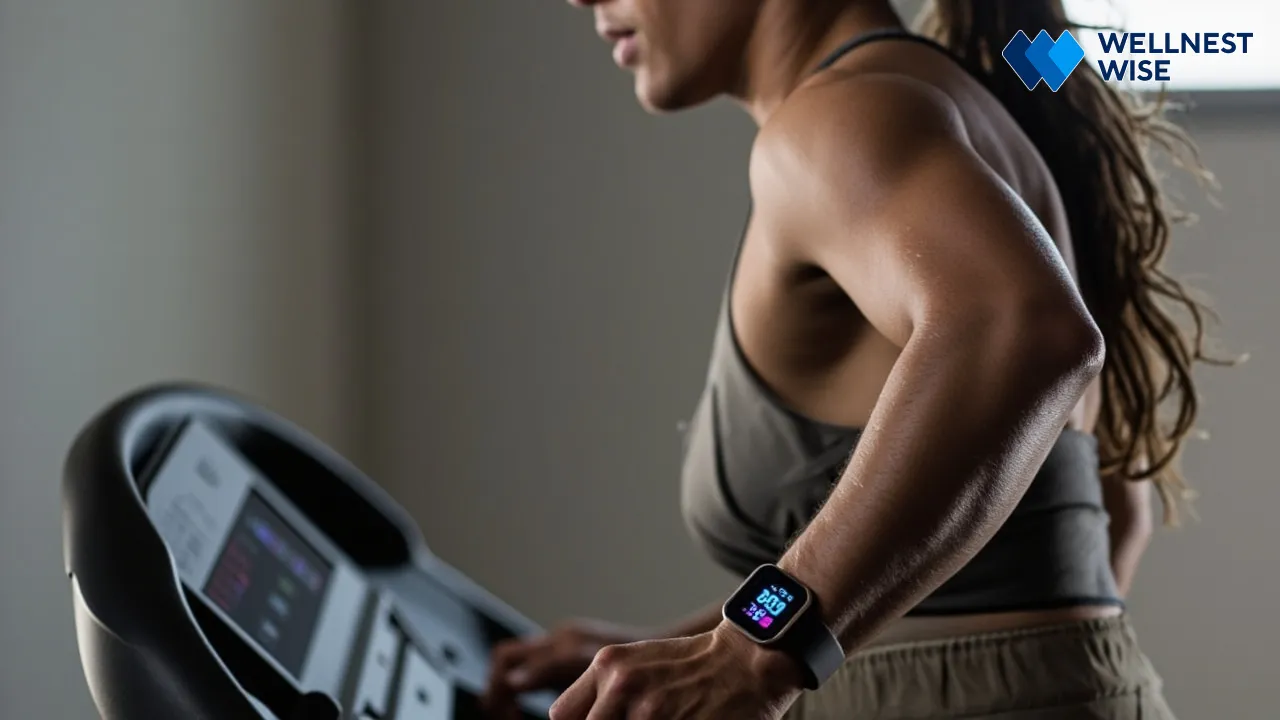
Identifying Your Target Heart Rate Zone Walking for Maximum Benefit
To ensure you are truly maximizing benefits, you must be walking within your Target Heart Rate Zone. Monitoring your heart rate transforms walking from a generalized activity into a precise, scientific workout.
- Calculate Maximum Heart Rate (MHR): Use the standard formula: 220 minus your age. (E.g., for a 40-year-old: 220 – 40 = 180 bpm).
- Determine Fat Burning Zone: This is 60–70% of your MHR. This zone is ideal for sustained effective walking for weight loss.
- Determine Cardiovascular Fitness Zone: This is 70–80% of your MHR. Pushing into this zone is excellent for improving VO2 max and overall heart health (CDC).
Incorporating High-Intensity Interval Training (HIIT) Walking
High-Intensity Interval Training (HIIT) walking, often called “fartlek” training, involves alternating short bursts of very fast walking with longer periods of recovery walking. This method significantly increases post-exercise calorie burn (known as EPOC) and is one of the most powerful fat burning walking techniques available without running.
Structuring Effective Walking Intervals for Fat Burn
A great starting structure for walking intervals for fitness is the 1:2 ratio. For example, walk very briskly (RPE 7-8) for 60 seconds, followed by 120 seconds of easy/moderate recovery walking (RPE 3-4). Repeat this cycle 8–10 times. This spikes your heart rate and metabolic rate repeatedly.
The Role of Recovery Periods in Interval Walking
The recovery period is not downtime; it is an active break. It allows the body to partially clear metabolic waste products while keeping the heart rate elevated enough to prime the system for the next high-effort burst. This sustained, high-demand cycling creates the optimal hormonal and metabolic environment for accelerated weight loss.
Utilizing Elevation and Terrain Changes to Boost Intensity
Walking uphill, even a slight incline, drastically increases the engagement of major muscle groups (glutes and hamstrings) and requires significantly more energy. If using a treadmill, increasing the incline to 3–5% is an immediate way to boost intensity without increasing speed. Outdoors, seek out trails or slight slopes to naturally implement varied terrain, serving as built-in walking intervals for fitness.
The Benefits of RPE (Rate of Perceived Exertion) for Self-Monitoring
While heart rate monitors are precise, the RPE (Rate of Perceived Exertion) walking scale (1 to 10) is an invaluable self-monitoring tool. RPE 4-6 is your optimal fat-burning zone, where you feel moderate effort. RPE 7-8 is high-intensity interval level, where conversation is difficult. Relying on RPE helps you adjust your pace instantly based on factors like fatigue, weather, or terrain, ensuring consistent effort toward your goal.
Integrating Walking into a Sustainable Weight Loss Lifestyle
The single biggest obstacle to achieving sustainable weight loss through walking is inconsistency. A rigorous week followed by a month off yields zero long-term benefit. True success comes not from heroic effort but from strategic integration—making walking an irreplaceable part of your daily rhythm. This section focuses on the non-movement aspects that support your walking habit, including scheduling, nutrition, and leveraging modern tracking tools for adherence.

Consistency Over Duration: Scheduling Effective Walks Weekly
The NHLBI emphasizes that small, consistent doses of exercise are more effective for weight management than sporadic, long sessions. Aim for at least 30 minutes of brisk walking five days a week. Use your calendar to schedule walks like appointments—non-negotiable time slots—to reinforce the habit and ensure you meet the recommended 150 minutes of moderate activity weekly (CDC).
Hydration and Fueling: Pre and Post-Walk Nutrition for Recovery
Walking, especially brisk walking or interval training, requires adequate fueling and rehydration. For walks lasting under an hour, water is often sufficient. If walking for over 60 minutes, consume a small, easily digestible carbohydrate (like a piece of fruit) 30 minutes prior.
Expert Insight: “Consistent walking improves insulin sensitivity and glucose metabolism, aiding diabetes prevention and management. But this benefit is amplified only when paired with mindful hydration and nutrient timing,” reports the National Heart, Lung, and Blood Institute (NHLBI).
Post-walk, focus on rehydration with water or electrolytes. If your walk was vigorous, a small meal containing protein and complex carbs aids muscle recovery and glycogen replenishment.
Leveraging Technology: Using Apps and Wearables to Track Progress
Modern technology is essential for keeping track of metrics beyond simple steps. Wearables can monitor your Target Heart Rate Zone, cadence, distance, and pace. Utilizing apps that track routes or gamify your progress can provide the external motivation and feedback necessary to maintain high intensity and track subtle improvements in your cardiovascular fitness. Seeing data quantify your effort provides powerful reinforcement.
Addressing Plateaus: Knowing When to Increase Distance or Intensity
If your weight loss stalls after several months, you’ve likely hit a plateau because your body has adapted to the current routine. To break through, you must apply the principle of progressive overload. Don’t just increase distance; increase intensity. Introduce more hilly routes, add light resistance (safely, using a small backpack), or implement longer, faster HIIT walking intervals.
Preventing Injury and Maintaining Longevity in Your Routine
Walking is mercifully low-impact, but ‘low-impact’ does not mean ‘zero-impact.’ Repeating the same movement hundreds of times a day, especially with poor biomechanics, can lead to chronic aches and overuse injuries. For your walking regimen to be truly sustainable and contribute to long-term well-being, we must prioritize proper preparation, cool-down, and the right equipment. Longevity in fitness hinges on injury prevention.
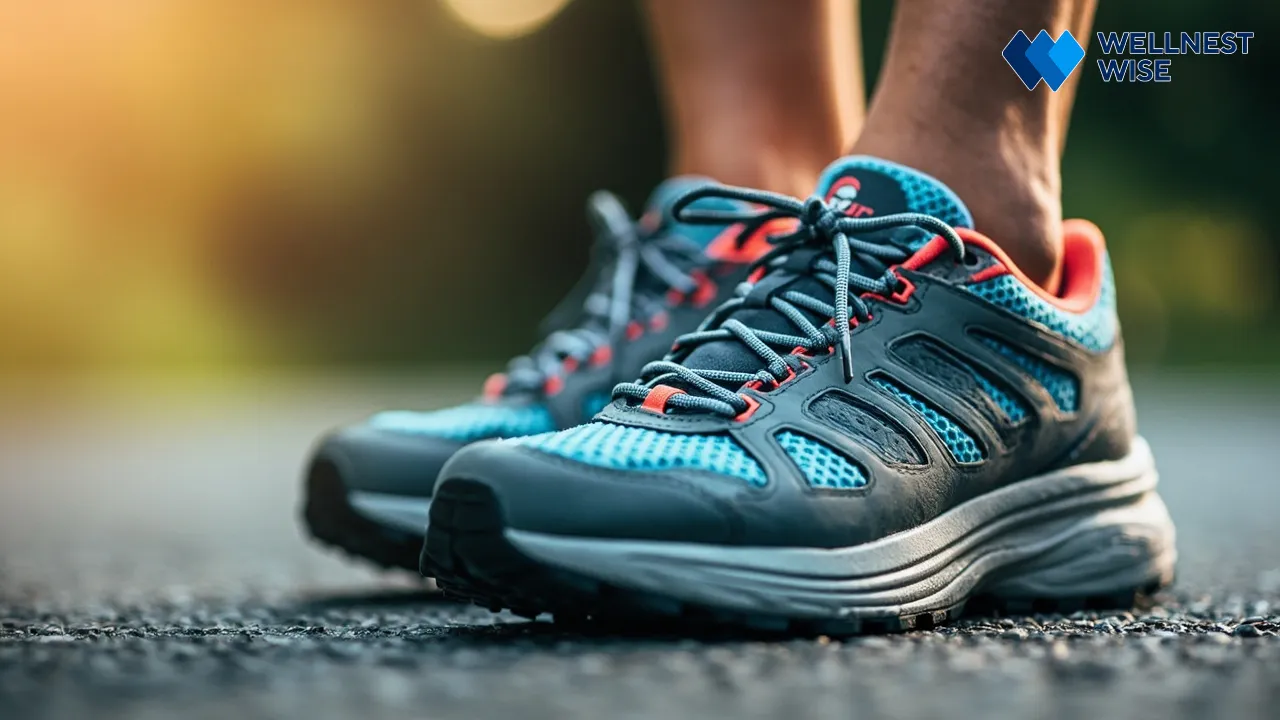
Selecting the Right Footwear: Support, Cushioning, and Fit
The single most important gear investment is appropriate footwear. Walking shoes differ from running shoes by offering greater sole flexibility and often more support in the heel. Ensure your shoes fit correctly, offering space for toe movement, and replace them every 300–500 miles. Worn-out cushioning compromises shock absorption and significantly increases the risk of foot and joint injuries, making high-quality, supportive footwear essential.
Essential Warm-up and Cool-down Stretches for Walkers
Before starting your brisk walking session, spend 5 minutes doing a dynamic warm-up: light marching, high knees, butt kicks, and gentle arm circles to prepare muscles for movement. Immediately after your walk, perform static stretches, holding each for 20–30 seconds. Focus on the major movers: hamstrings, calves, quadriceps, and hip flexors. This helps restore muscle length, prevents post-walk stiffness, and improves overall flexibility.
Recognizing and Preventing Common Walking Injuries
While serious injuries are rare, certain painful conditions can occur due to sudden increases in mileage, poor form, or inappropriate footwear. Never ignore localized pain; address it early. The NIA stresses that awareness of subtle pain signals is vital, particularly as we age, to maintain mobility and consistency.
Addressing Foot and Leg Pain (Shin Splints, Plantar Fasciitis)
Shin splints often result from rapidly increasing mileage or walking on hard, unforgiving surfaces. Prevention involves gradually increasing distance (no more than 10% per week) and ensuring proper arch support. Plantar Fasciitis (pain in the heel/arch) is typically related to poor shoe support or tight calves; deep calf stretches and rolling the foot over a tennis ball can provide significant relief.
Listening to Your Body: Knowing When Rest and Recovery are Essential
Recovery days are just as important as walking days for effective walking for weight loss. Chronic muscle soreness, persistent fatigue, or unexplained declines in performance are all signs of potential overtraining. Allow for 1–2 full rest days per week, or switch to active recovery (very light movement) to ensure your body repairs muscle fibers and prevents physical and mental burnout, maintaining long-term commitment.
*
Conclusion & Takeaways
To truly leverage walking for weight loss and maximize your cardiovascular fitness, the takeaway is simple: intensity trumps volume. Moving beyond the passive 10,000-step mentality and embracing metrics like cadence, heart rate zones, and proper posture transforms a daily habit into a targeted, results-driven workout. By integrating brisk walking with strategies like interval training and careful self-monitoring (RPE), you are choosing a sustainable, low-impact path to profound metabolic and physical change. Start smart, stay consistent, and let every step count toward a healthier you.
FAQ
How fast do I need to walk to actually burn fat?
You need to walk at a pace that qualifies as moderate intensity, generally 3.0 to 4.0 mph (4.8 to 6.4 km/h). This speed should elevate your heart rate to approximately 60–70% of your maximum heart rate. You should be able to speak, but not sing, due to the increased effort. This range ensures you are in the fat burning zone and maximizing metabolic efficiency.
Is walking 10,000 steps enough for guaranteed weight loss?
Walking 10,000 steps is an excellent goal for general activity, but it does not guarantee weight loss. Weight loss depends on maintaining a caloric deficit, and the quality of the steps matters more than the quantity. For guaranteed results, ensure that at least 3,000 to 4,000 of those steps are performed at a brisk walking intensity (RPE 4-6).
How can I turn my daily walk into a high-intensity workout without running?
The best way to inject high intensity without running is through HIIT walking and utilizing elevation. Implement intervals where you spike your pace to RPE 7-8 for 30–60 seconds, followed by 1–2 minutes of recovery. Alternatively, seek out hills or increase the treadmill incline to activate larger muscle groups and push your heart rate into the higher Cardiovascular Fitness Zone (70–80% MHR).