
When a persistent cough strikes your child in the middle of the night, it doesn’t just steal their sleep—it steals yours too. Many parents instinctively reach for over-the-counter syrups, only to learn that common cough suppressants are often ineffective, or even unsafe, for little ones under six. The good news is that pediatric experts universally endorse supportive, natural care. By focusing on smart home remedies for toddler cough and utilizing evidence-based natural cough remedies for kids, you can soothe their throat and restore calm nights quickly. Let’s explore the doctor-approved strategies that truly work.
Understanding the Pediatric Cough: Types, Triggers, and Safety First
Before you can effectively treat a cough, you need to understand it. A cough is not an enemy; it’s a natural reflex—a miniature defense system kicking pollutants or mucus out of the airways. However, knowing why your child is coughing and differentiating between types is crucial for choosing the right non-pharmaceutical intervention and, more importantly, knowing when to call the doctor.

The Biological Purpose of Coughing: Natural Airway Defense
Coughing serves the vital function of protecting the lungs by forcefully expelling irritants like dust, foreign particles, or excessive mucus. It’s an involuntary protective reflex mediated by the nervous system. When your child has a cold, the lining of the respiratory tract becomes inflamed and produces more mucus. The cough is simply the body’s mechanism trying to clear this congestion, preventing secondary issues.
Distinguishing Between Wet (Productive) and Dry (Tickling) Coughs
Identifying the type of cough dictates the home care approach. A wet cough, often called a productive cough, suggests the presence of mucus or phlegm in the chest or throat. These often sound rattly or gurgling. The goal of treatment here is to thin and loosen the mucus, acting as an expectorant. Conversely, a dry cough is often irritating, scratchy, and non-productive, usually signaling inflammation or post-nasal drip. For dry, tickling coughs, the focus shifts to soothing the airway irritation.
When Cough Indicates a Viral Etiology vs. Bacterial Concern
The vast majority—around 90%—of acute coughs in children are caused by viral etiology, such as the common cold or flu. These viral coughs are self-limiting, meaning they resolve on their own, typically within 7 to 14 days, and do not respond to antibiotics. A bacterial concern, while less common, often presents with a high, persistent fever, lethargy, and a significantly ill appearance. Persistent symptoms coupled with breathing difficulty warrant medical attention.
Why Conventional OTC Cough Suppressants are Generally Not Recommended for Young Children
The American Academy of Pediatrics (AAP) and the CDC explicitly advise against giving over-the-counter (OTC) cough and cold medications to children under the age of four, and caution against their use up to age six. These medications have not been proven effective in this age group and carry significant risks of adverse side effects, including accidental overdose, particularly when combined with other cold preparations.
The Risks Associated with Dextromethorphan (DM) in Pediatric Care
Dextromethorphan (DM) is a common cough suppressant found in many OTC syrups. While effective in adults, in young children, high doses can lead to confusion, irritability, shallow breathing, and serious neurological effects. Because precise dosing for small children is challenging and the benefit is negligible, pediatric experts strongly recommend avoiding DM products in favor of safer, natural cough remedies for kids.
Essential Supportive Care: Optimizing the Child’s Environment for Nighttime Relief
The battle against a child’s cough often intensifies at night. Lying flat allows mucus to pool, triggering the cough reflex. Controlling the bedroom environment and establishing smart bedtime rituals are often more effective than any syrup. These supportive steps—focused on hydration protocols and air quality—directly address the mechanical triggers of the cough, leading to better rest for the whole family.
Implementing Optimal Hydration Protocols for Mucus Clearance
Hydration is foundational to managing a wet cough. Water helps thin the thick mucus secretions in the sinuses and chest, making them easier to expel. When mucus is thick and sticky, it takes more force to cough it up, leading to painful, unproductive fits. Ensure your child drinks frequently throughout the day.
Age-Appropriate Warm Fluids to Soothe the Throat
Warm fluids are highly effective for soothing a dry, irritated throat. For toddlers and older children, warm water, decaffeinated tea (like chamomile), or diluted 100% fruit juice can provide comfort. The warmth temporarily relaxes the airway and eases spasms, helping soothe children’s nighttime cough.
Utilizing Humidification: Cool-Mist Humidifier Use for Colds and Croup
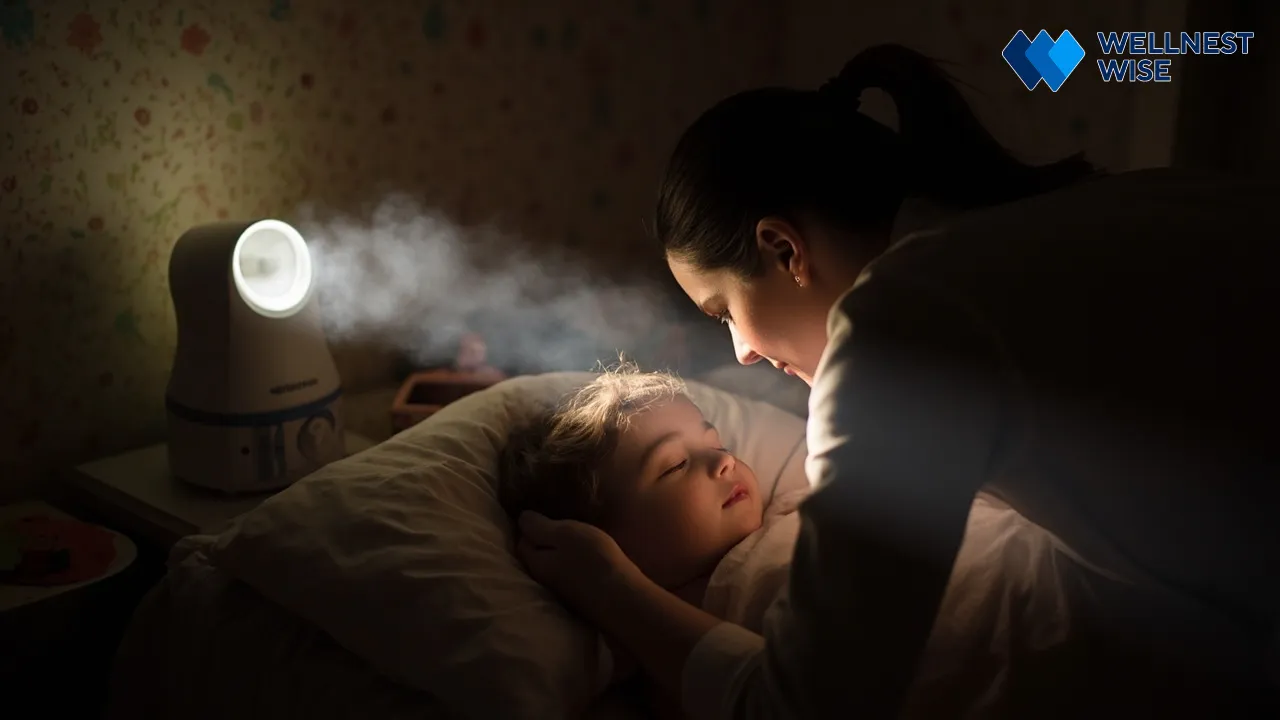
Dry air is an airway irritant. By using a cool-mist humidifier in the child’s room, especially during the colder months when indoor heat dries the air, you add essential moisture. This moist air soothes the inflamed lining of the nose and throat and helps loosen mucus in the chest. This is particularly helpful for conditions characterized by barking coughs, like mild Croup. Remember to clean the humidifier daily to prevent mold or bacterial growth.
Airway Management: Elevating the Head to Soothe Children’s Nighttime Cough
Gravity is a powerful tool. When lying completely flat, post-nasal drip irritates the back of the throat and triggers nocturnal coughing fits. For older toddlers and children, placing a pillow under the mattress at the head of the bed, or using extra pillows if safe, gently elevates the head and upper body. This helps drain mucus downwards, preventing the irritation that compromises sleep.
Saline Nasal Spray and Suctioning: Pre-Sleep Strategies for Managing Congestion
Often, the cough is merely a result of throat irritation from sinus drainage. Using a simple, sterile saline nasal spray for kids 15 minutes before bedtime can significantly clear nasal passages. For infants and very young toddlers, this is followed by gentle suctioning (using a bulb syringe) to physically remove the congestion, reducing the drip that fuels the cough overnight.
Potent Natural Expectorants: Evidence-Based Remedies from the Pantry
While many “natural” remedies exist, only a select few have robust scientific backing, particularly in pediatric studies. These remedies act as safe, gentle Expectorants, helping the body naturally clear the airways. The most powerful tool in the pantry, proven by multiple studies to reduce cough severity, is simple—but it must be administered correctly and with a strict age limit.

The Science of Honey: Mechanism as a Natural Cough Suppressant (Ages 1+)
Honey isn’t just a folk remedy; it’s a proven treatment. Research suggests honey is often as effective as over-the-counter suppressants in reducing cough frequency and severity, and improving sleep quality in children over one year old. Its mechanism is simple: its thick consistency coats the irritated throat lining, providing immediate relief.
Expert Insight: “The American Academy of Pediatrics (AAP) supports the use of honey in children over age one for reducing cough frequency. As a parent who’s been through many sleepless nights, I found giving a small dose before bed was the single most effective non-drug remedy we used.”
Age-Specific Honey Dosage Recommendations for Toddlers and Older Children
For maximum safety and effectiveness, stick to these guidelines, typically recommended before bedtime. Crucial EEAT Note: Never give honey to infants under the age of one year due to the risk of infant botulism.
| Child Age Range | Recommended Dosage | Administration Method | Purpose |
|---|---|---|---|
| :— | :— | :— | :— |
| 12 months to 5 years | 1/2 teaspoon (2.5 ml) | Straight, or mixed in warm water/tea | Soothes throat; reduces coughing fits |
| 6 years to 11 years | 1 teaspoon (5 ml) | Straight, or mixed in warm tea | Natural cough suppressant and sleep aid |
| 12 years and older | 2 teaspoons (10 ml) | Mix with lemon for added Vitamin C | Maximize coating and immune benefits |
Steam Therapy: Leveraging Warm Vapors for Chest Congestion Relief in Kids
For a rattling, wet cough signaling chest congestion relief kids desperately need, steam is incredibly helpful. Running a hot shower in the bathroom and sitting with your child in the steamy room for 10–15 minutes allows the warm, moist air to penetrate the lungs. This thins thick bronchial secretions, making the productive cough easier and less exhausting.
Herbal Infusions and Warm Teas: Safe Options for Soothing Airway Irritation
Certain mild herbal teas can offer relief through warmth and their natural soothing properties. These are excellent alternatives to sugary juices and provide the necessary hydration. Always ensure the tea is warm, not hot.
Specific Safe Herbs for Pediatric Use (e.g., Thyme, Chamomile)
Chamomile tea is gentle and offers relaxation benefits, helping a tense child settle down. Thyme infusions are traditionally used as a mild antispasmodic and expectorant, helping to relieve cough spasms. Ensure any herbal remedy is mild, brewed weakly, and used sparingly.
Vapour Rub Application: Strategic Placement for Improved Breathing
Topical rubs containing mild essential oils (like menthol or eucalyptus) can temporarily relieve congestion when applied to the chest and back. Important: Never apply these products near the nose of a young child, as the strong fumes can be irritating and potentially dangerous. Applying a thin layer to the chest (far away from the face) can sometimes improve breathing enough to facilitate easier sleep.
Dietary Aids and Immune Support: Shortening the Duration of the Cough
While supportive care treats the symptom (the cough), targeted nutrition can treat the cause by supercharging the body’s recovery system. The goal of using dietary aids for pediatric cough isn’t to stop the cough instantly, but to provide the tools the Immune support system needs to fight the underlying infection quickly, thereby shortening the cough duration.

Key Micronutrients for Strengthening the Immune Support System
When the body is fighting a virus, its demand for specific micronutrients increases. Ensuring your child is getting adequate intake of the following can make a measurable difference in the speed of recovery:
- Vitamin C: Found in citrus fruits, bell peppers, and kiwi. Evidence suggests adequate Vitamin C can slightly shorten the duration of a cold.
- Zinc: Vital for immune function. Foods like lean meats, beans, and seeds are good sources. Supplementation, when initiated early, may potentially reduce cold duration.
- Vitamin D: Essential for regulating immune response. Ensuring adequate levels can help the body respond robustly to respiratory viruses.
The Role of Probiotics in Supporting Respiratory Health and Recovery
The gut microbiome plays a huge role in overall immune regulation. Consuming foods rich in probiotics, such as yogurt (specifically those containing live, active cultures) and kefir, can help strengthen the immune system. A balanced gut flora may indirectly help reduce the severity or duration of respiratory tract infections, including those that cause a lingering cough.
Anti-Inflammatory Foods: Reducing Throat and Airway Swelling
Infection causes inflammation, which leads to swelling and irritation in the airways and throat—key triggers for dry coughs. Foods rich in anti-inflammatory omega-3 fatty acids (like fatty fish or walnuts) and antioxidants (like colorful berries) can help manage this systemic response, making the child more comfortable while the body heals.
Traditional Comfort Foods: The Value of Warm Broths and Chicken Soup
There’s a reason warm broth and chicken soup are cornerstones of cold care across cultures. Beyond just providing hydration, the steam from the soup helps clear nasal congestion, and the warmth soothes the throat. Furthermore, warm broths contain compounds that may subtly inhibit the inflammation involved in the cold process.
Recognizing Red Flags: When to Seek Immediate Pediatric Medical Attention
While most pediatric coughs are benign and manageable at home, certain signs demand immediate professional assessment. Understanding these “red flags” is the most important component of responsible home care. If your child’s cough changes suddenly, becomes severe, or is accompanied by other worrying symptoms, trusting your parental instinct and seeking medical help is non-negotiable.

Identifying Signs of Respiratory Distress and Difficulty Breathing
If your child is working hard to breathe, this is an emergency. Look for signs that the body is struggling for air:
- Retractions: Sucking in of the skin between the ribs or at the neck when they inhale.
- Flared Nostrils: The nostrils widen with each breath.
- Rapid Breathing: Breathing rate is significantly faster than normal for their age.
- Color Change: Lips or nail beds appear bluish or gray.
Distinguishing Between Severe Wheezing, Stridor, or Potential Croup
Wheezing is a high-pitched whistling sound typically heard when exhaling, often indicating narrowing of the lower airways. Stridor is a harsh, vibrating sound heard primarily on inhaling, usually signaling obstruction or narrowing in the upper airway (a serious sign, often linked to severe Croup). If your child has a barking cough combined with stridor, seek immediate care.
Persistent Cough Duration: Pediatrician Recommendations for Follow-Up
Most viral coughs resolve entirely within 10 to 14 days. If the cough persists beyond three weeks, it is classified as a chronic cough and requires evaluation. A long-lasting cough could indicate undiagnosed allergies, asthma, reflux, or continuous exposure to environmental irritants (like secondhand smoke).
Assessing Fever, Lethargy, and Refusal of Hydration
A mild fever is common with a cold. However, if a high fever (above 102°F or 38.9°C) lasts more than three days, or if the fever initially disappears and then returns, it could signal a secondary bacterial infection. Lethargy (extreme tiredness, lack of interest in play) and, most dangerously, refusing to drink fluids for several hours, indicate dehydration or severe illness and require immediate assessment.
Reviewing Medications to Avoid: The Importance of Consulting a Professional
If your child is already taking prescription medications for chronic conditions (like asthma or allergies), always consult your pediatrician before introducing any new herbal remedies. New substances can interfere with existing medications. When initiating home care, make sure your doctor is aware of all treatments being used.
Conclusion & Takeaways
Managing a pediatric cough safely relies less on complex pharmaceuticals and more on consistent, evidence-based supportive care. Remember, the cough is healing; your job is simply to make the process comfortable. Prioritize hydration and humidity, leverage the proven power of honey (age 1+), and ensure their diet supports a robust immune response. By following these pediatrician-approved natural strategies, you are equipping your child’s body to recover quickly and reducing the stressful sleepless nights for everyone involved.
FAQ
What natural ingredients actually suppress a cough?
The most scientifically supported natural ingredient for suppressing a cough in children over one year old is honey. Its mechanism is physical—the thick, viscous liquid coats the pharynx, soothing irritation and reducing the frequency of the tickling cough reflex, especially at night. Other natural methods, like steam or warm fluids, work by thinning mucus rather than true suppression.
When should I worry about my child’s cough?
Worry and seek immediate medical attention if the cough is accompanied by signs of respiratory distress, such as difficulty breathing, retractions (sucking in of the ribs/neck), blue lips, or a harsh, high-pitched noise (stridor) when inhaling. Also consult a doctor if the cough persists beyond three weeks or if the child is lethargic and refusing all hydration.
How much honey is safe for a 3-year-old with a cough?
For a 3-year-old, the safe and effective dosage for soothing a cough is typically half a teaspoon (2.5 ml) administered 30 minutes before bedtime. This amount provides coating relief without posing digestive issues. Always ensure the child is over 12 months old before giving any honey.